


AI won't be for everyone: cheap devices disappear and technology becomes a luxury
- Alfredo Arn
- hace 3 días
- 2 Min. de lectura

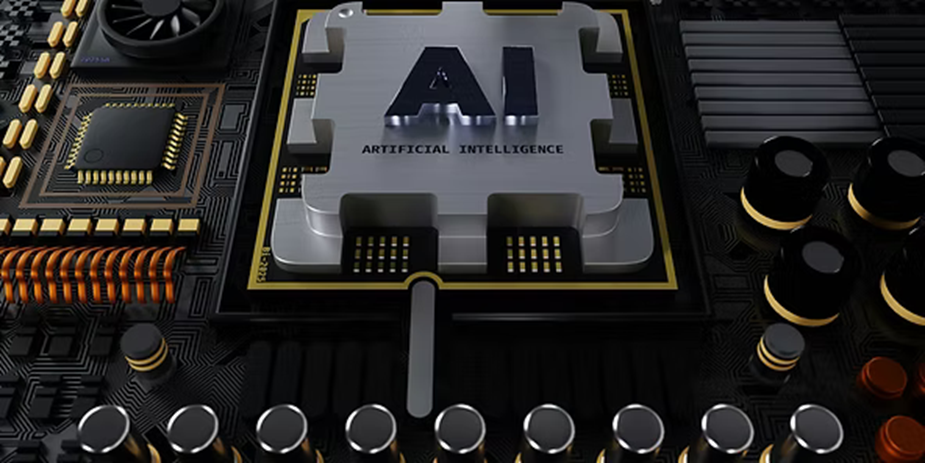
Artificial intelligence promised to democratize knowledge, but it is achieving exactly the opposite. As chipmakers refocus their production toward AI data centers, consumer electronics—phones, laptops, TVs—are becoming more expensive. The paradox is cruel: AI itself is killing cheap devices, and in the near future, access to modern technology will be a privilege reserved for those who can afford it.
Until now, the tech industry had managed to make devices cheaper year after year thanks to economies of scale and competition. That cycle has been broken. Memory makers like Samsung and SK Hynix have found that selling AI server chips leaves margins up to five times higher than making RAM for low-end phones. The consequence is obvious: they are quietly leaving the consumer market. According to Gartner, new laptops under $500 will disappear completely by 2028, not because there is no demand, but because it will no longer be profitable to produce them.
It's not just about higher prices. It is that the low-end is being eliminated structurally. Apple, Microsoft, Dell and Lenovo have already raised their prices between $125 and $270 per unit. Analysts at Counterpoint Research predict that in 2026 phones with only 4GB of RAM will return to the market, a standard that was thought to be surpassed. But the most serious thing is what is coming: manufacturers are not investing in making technology cheaper for the end consumer, but in maximizing profits with enterprise AI. The average citizen will be left with more expensive, worse or directly non-existent devices in their price range.
What about AI? It will not be the savior. Smart assistants, processors with integrated NPUs, and on-device AI features require more powerful and therefore more expensive hardware. The irony is that to use local AI you need a device that, precisely because of the chip crisis, costs more and more. Generative AI features on mobile and desktop will only be available in the high-end. The rest of the users will have limited versions, paid cloud services or no AI at all. The digital divide will not only be one of connection, but also of processing capacity.
The market will react, but not in favor of the majority. The only alternative for consumers with fewer resources will be the refurbished device or the second-hand market, where equipment from two or three generations ago will circulate. Meanwhile, a privileged segment of the population — those who can spend more than $1,000 on a phone or $1,500 on a laptop — will enjoy the latest technology with built-in AI. The rest will settle for what survives. Technology, which was promised universal, is becoming a marker of class.
The final message from analysts is stark: the era of cheap devices will not return. AI has reshaped the semiconductor industry forever, and manufacturers have no incentive to go back. In 2028, when $500 laptops are a souvenir, two realities will coexist: those who can afford AI and those who are excluded from it. Technology was never egalitarian, but this time the barrier is not knowledge: it is the chip. And chips, now, are for few.


Comentarios